The Joy of Building Up Your Own Custom Bike

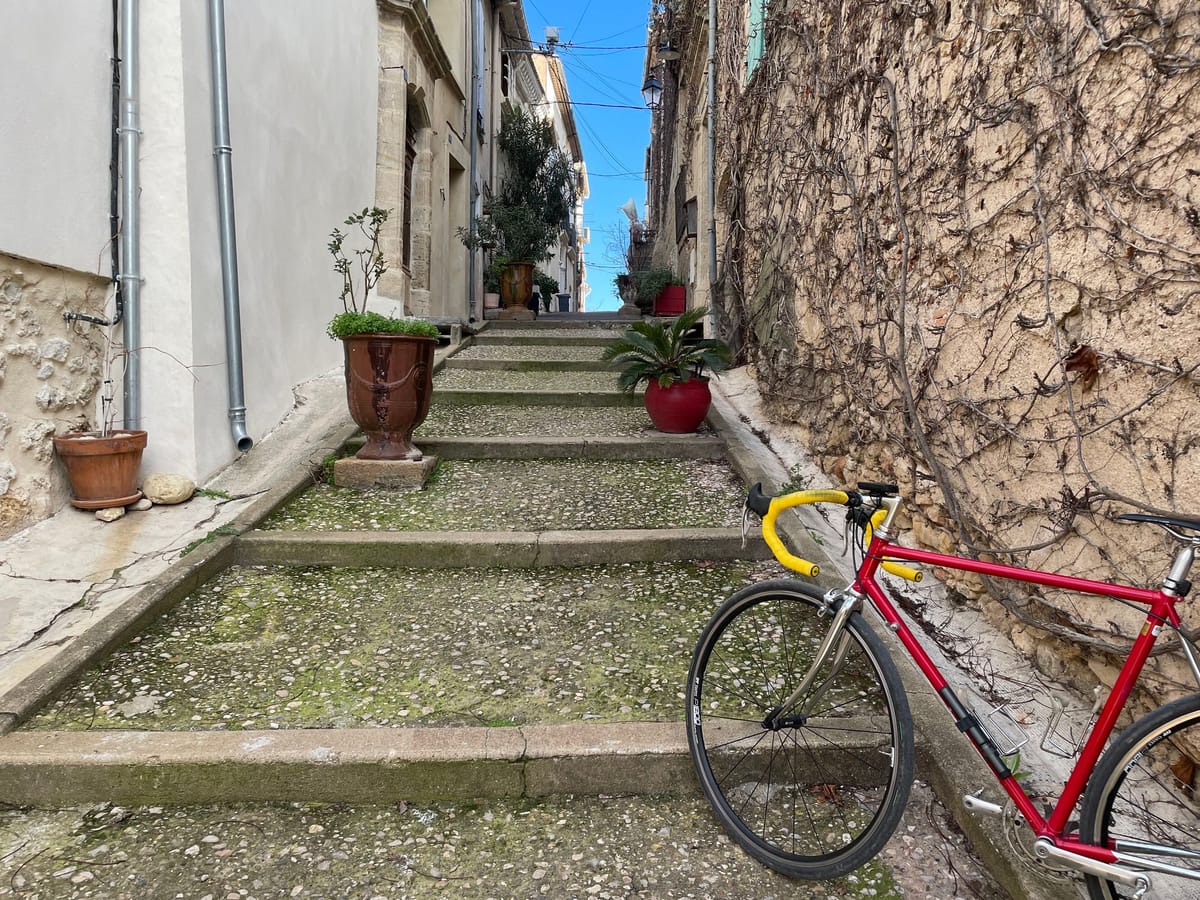
It all started when I was about 15 years old. I had gotten into road cycling and joined the local cycling club. I was inspired to get into cycling by my uncle, my mother's younger brother. He would do crazy things (at least I thought so when I was a smaller kid) like cycle ~180 kilometres from the city of Biel/Bienne to the small village of Ganterschwil, where I grew up. Or he'd tour half of France or cycle down to Southern Italy and visit us in Lecce on a tandem with his then not-yet wife.
I was riding an orange steel racer from the early eighties. My father had, for a very short time, taken to cycling. But then the bike was left standing in our cellar on its flat wheels for years. When I started to join the club rides, a friend of my father's helped me to bring it back into shape and make it rideable again. It was actually a pretty good base to get started: a venerable Reynolds 531 lugged steel frame.
Soon enough, however, I was clocking in hundreds of kilometres in the hilly surroundings of the Toggenburg valley and even took up racing junior road races. Technology was starting to develop quickly, and combined braking/shifting levers started to show up—first from Shimano and then the beautiful Ergopower levers from Campagnolo. My club friends around me started to get new, beautiful bikes. In short: I longed to get my own top-notch, contemporary road bike.
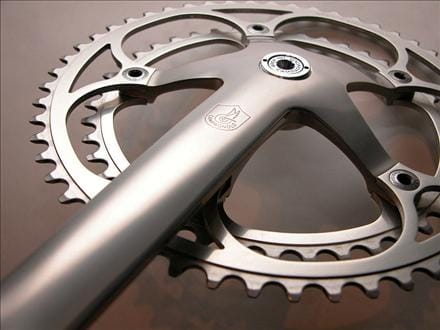
This is where my uncle and I sealed a deal: he'd chip in the frame and, after getting past some nostalgia, parted ways with the most beautiful crankset ever produced: the Campagnolo C Record cranks. Flat like a stingray and in polished aluminium, it would make any bicycle lust-worthy! My end of the deal was that I'd have to finance the rest of the parts.
So, I started two things: saving money and sifting through catalogues to find the parts I'd want to have on my bike. For the next year or so, I would spend a part of my spring and autumn vacations cleaning windows in my high school to earn money for my new bike. At the same time, I started my very first Excel sheet with bike parts.
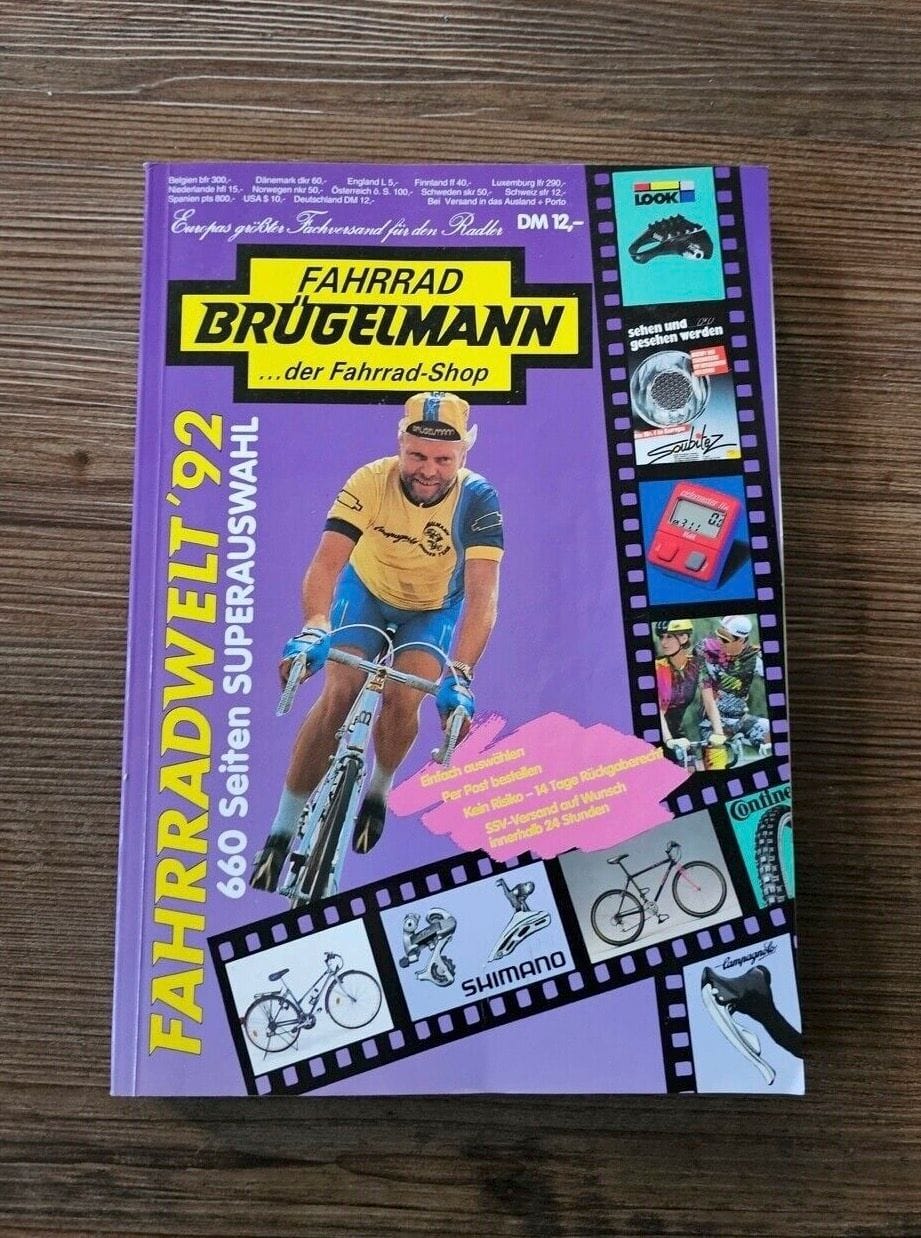
Compiling the list of parts obviously needed a lot of research. In the early nineties, the internet was not really a thing yet, certainly not for a teenager in the Swiss countryside. So my main source of knowledge were two major bike catalogues: Radsport Gerber in Switzerland and Radsport Brügelmann in Germany. I ordered their catalogues and spent hours on end going through every detail and option, weighing my desire for the highest-level parts — Campagnolo Record, obviously — against my limited budget.
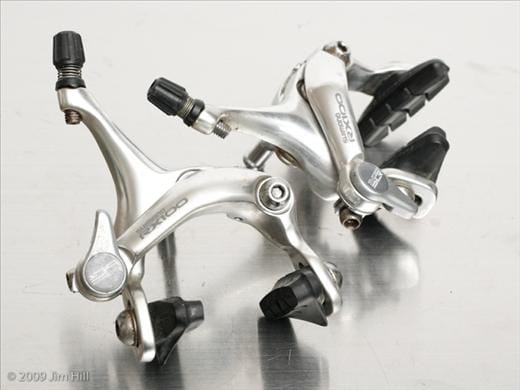
Balancing the budget resulted in some interesting parts decisions. While I didn't really want any Shimano parts on my bike, compared to Campagnolo, they had the more modern dual-pivot brakes. But the brakes had to be shiny polished metal to match the rest of the bike parts. The Shimano Dura Ace was out of my league, however. Luckily, Shimano at the time offered a budget-friendly option that was functionally almost equivalent to the Dura Ace brake and came in shiny metal: the RX100 brakes. They're still going strong 30 years after landing on my bike build.
Once I had all of my parts, I packed my stuff and travelled to Biel for a weekend of bike building. I still remember how I boarded the train packed with a bag of bike parts and two large boxes containing the front and rear wheel each. When I arrived at my uncle's place, in his garage, the fire-red steel frame was ready to be completed with the rest of the parts. On a spring day of concentrated wrenching, we built it all up. To be on the safe side, we dropped by the local bike shop and had the mechanic give it a once-over to make sure the bike was well assembled.
On the next day, it was time to finally go for the maiden voyage. What a feeling! I was zipping on the roads around the lake of Biel on my brand-new red arrow (in Italian: Frecciarossa), and it felt like it was an extension of my body. It perfectly matched me as I had chosen every part specifically for its performance, looks, and also budget. We rode around the lake and obviously also had to test the bike on a nice little uphill: the Twannberg. At some point, I couldn't help but push myself for a little fitness test. I dropped my uncle, who was riding along on his Klein Quantum, and gave it all I could. The bike didn't disappoint—at the top, I had to wait a couple of minutes for my uncle to catch up ;-).
| Part | Original | Today |
|---|---|---|
| Frame | Allegro Columbus SLX, 54cm | Allegro Columbus SLX, 54cm |
| Fork | Allegro Columbus, chrome | Chrome Fork |
| Headset | Campagnolo Veloce | Shimano 600 |
| Handlebar | 3TTT Forma SL ErgoPower | 3TTT Forma SL ErgoPower |
| Stem | 3TTT Podium | 3TTT Podium |
| Handlebar tape | Cinelli white | Lizard Skins DSP Bar Tape 2.5 mm - viper yellow |
| Seatpost | Fake Campagnolo Record | Ritchey Classic 2-bolt |
| Saddle | Selle Italia Turbomatic 2 | Selle Italia SLR TT Titanium |
| Rear derailleur | Campagnolo Chorus 8x | Campagnolo Chorus 8x |
| Front derailleur | Campagnolo Chorus | Campagnolo Chorus |
| Shifters/brake levers | ErgoPower Chorus | ErgoPower Chorus (left) & Athena (right) |
| Brakes | Shimano RX100 | Shimano RX100 |
| Crankset | Campagnolo C Record | Campagnolo C Record |
| Bottom bracket | Campagnolo Veloce | Shimano 600 |
| Pedals | Look PP56 Delta Clipless Pedals | Ritchey WCS Micro Road |
| Chain | Rohloff 8x | Campagnolo 9x |
| Cassette | Campagnolo Veloce 8x | Campagnolo Veloce 9x |
| Front hub | Campagnolo Veloce | DT Swiss Splined |
| Rear hub | Campagnolo Veloce | DT Swiss Splined |
| Rims | Campagnolo Lambda V polished Aluminium | DT Swiss P 1800 |
| Spokes | DT Competition | DT Aero Comp |
| Tyres | Continental Grand Prix | PIRELLI Cinturato Velo TLR 28" |